
Helping you make confident clinical decisions
Physiotherapy is complex. Between the reasoning, the research, and the demands of a busy practice, no clinician can hold every relevant consideration in mind for every presentation.
The Body Navigator is a clinical decision-support tool, registered as a Class I medical device with the MHRA, that runs a structured, multi-stage analysis of a specific presentation — surfacing the relationships, associations and considerations that shape clinical reasoning, alongside relevant specialist links.
Unlike a Q&A assistant, it works on the case in front of you, drawing on a private, curated and auditable knowledge base — to help you form a clearer hypothesis and reason past your own blind spots.

Case not adding up?
Patient not progressing?
Hypothesis not holding?
Clinical reasoning support, from first assessment to discharge.
Leave no Stone Unturned
The Body Navigator scans your case against tens of thousands possible branches of knowledge, relationships, associations and clinical reasoning pathways.
It surfaces the most relevant for you to consider as you build your own hypothesis and clinical picture.
Refine your clinical picture over time
Review and evolve your own clinical picture as the case develops. The Body Navigator surfaces relevant online resources, tests, and specialist links, directly tied to the presentation, to support and inform your reasoning.
Most clinical AI tools answer questions. The Body Navigator analyses a specific case history .
A regulated decision-support tool — not a chatbot.
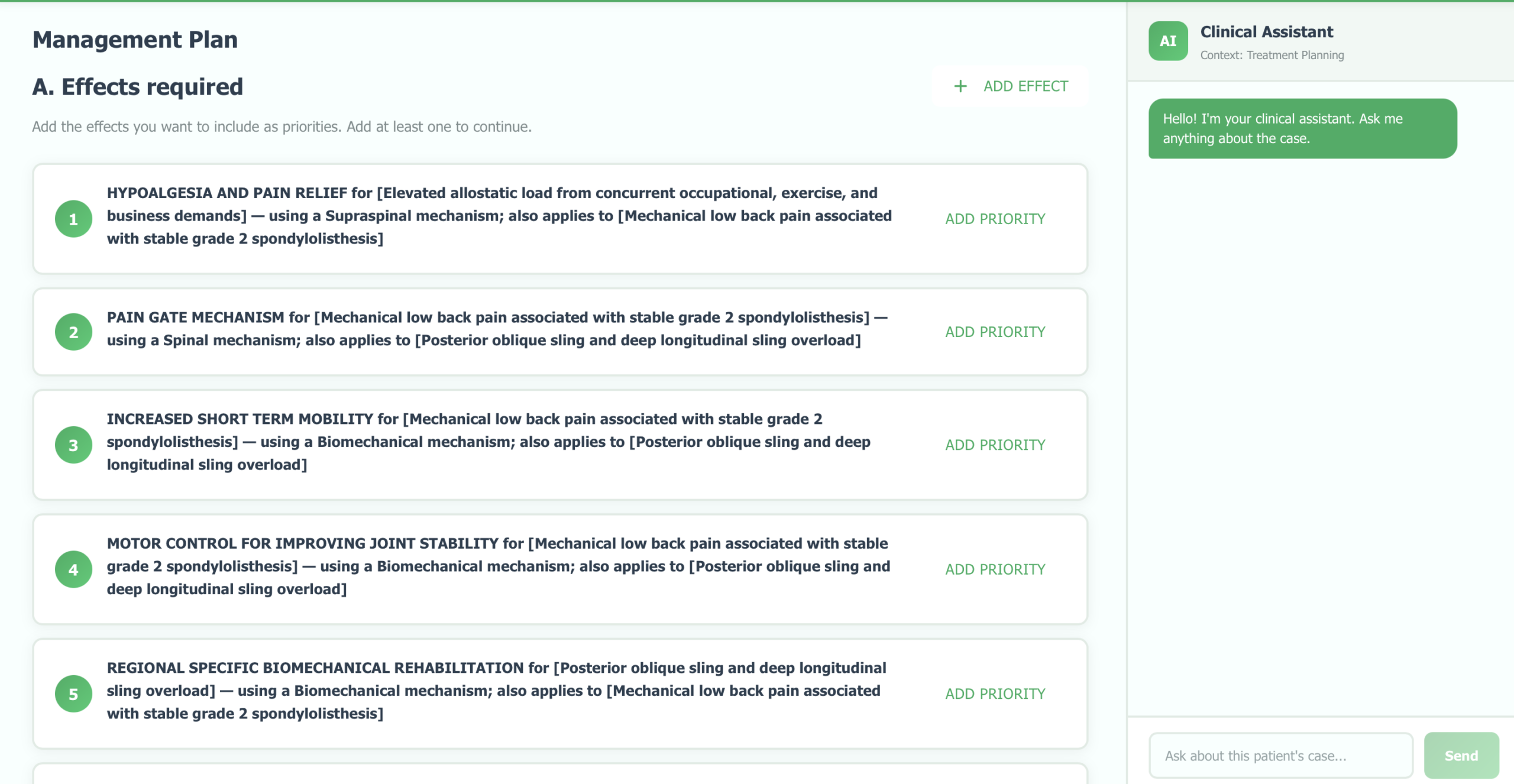
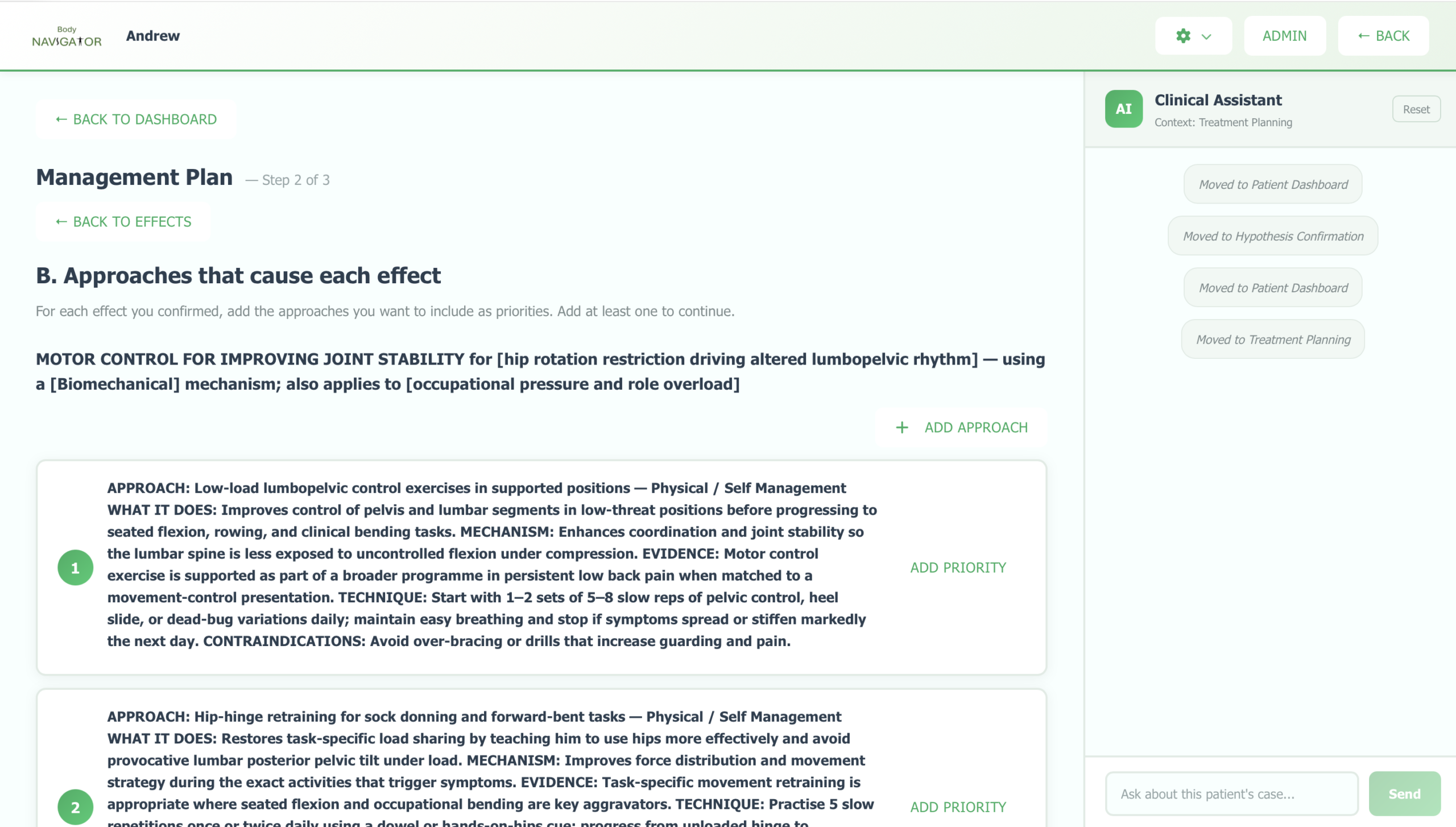
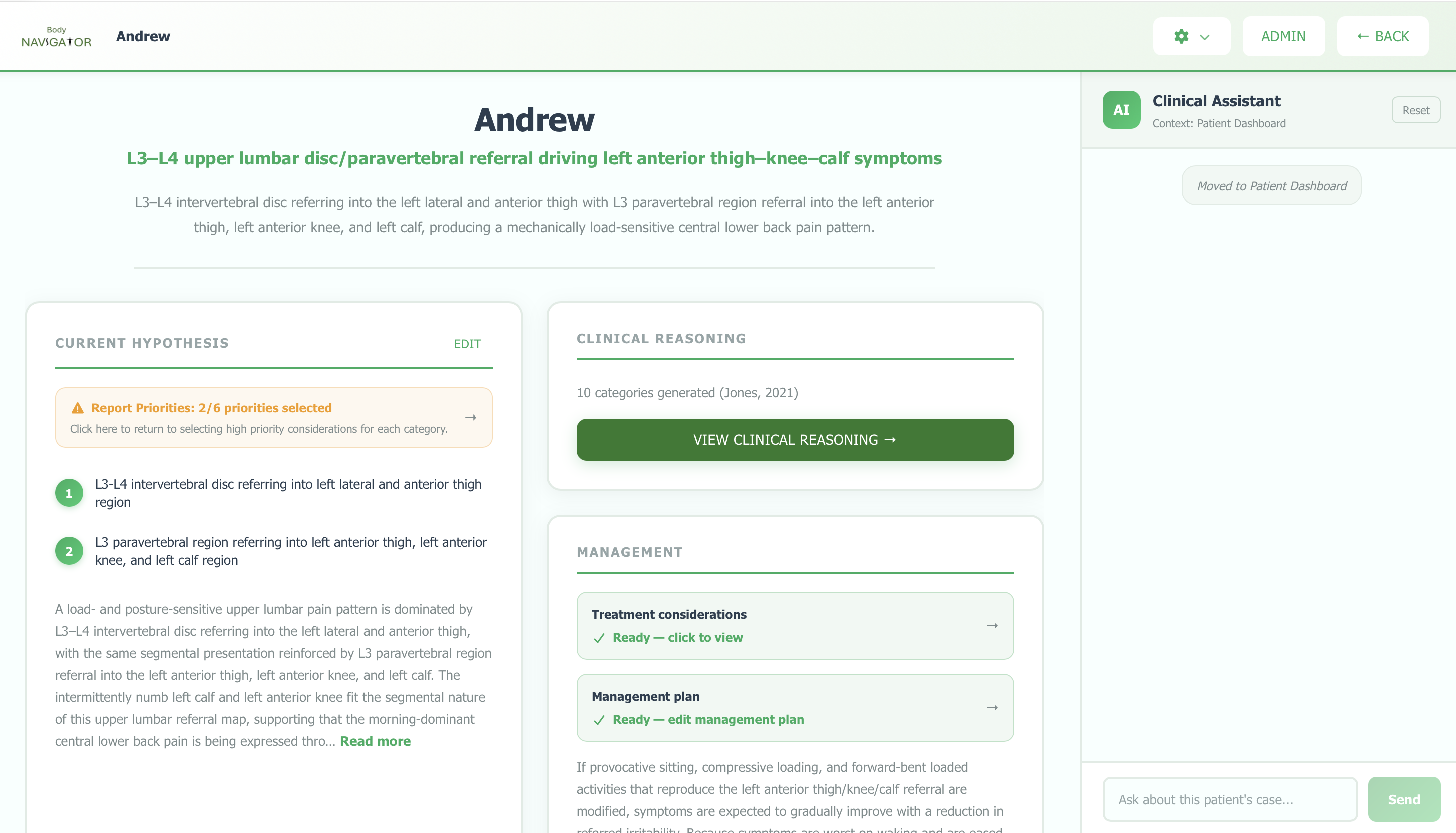
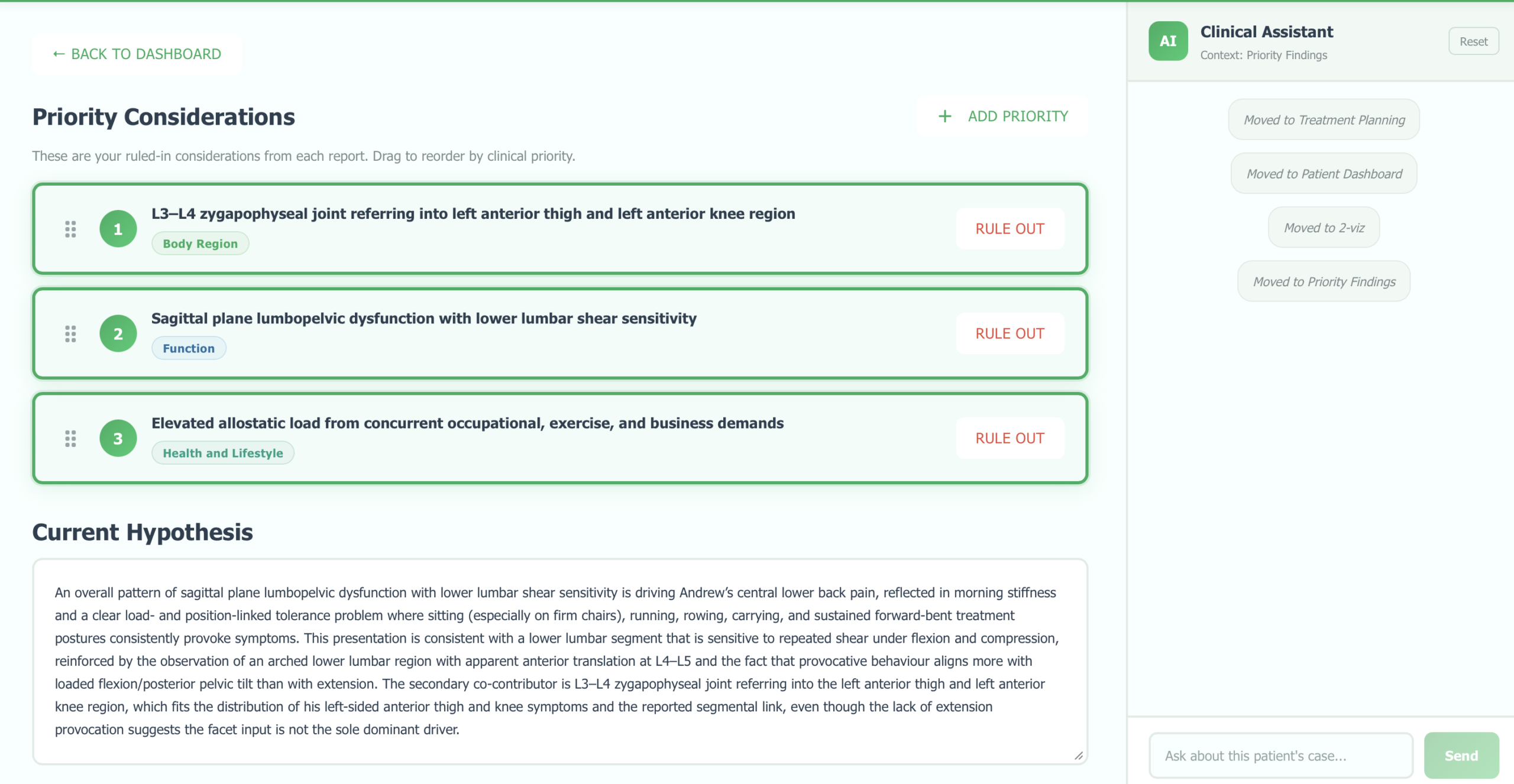
Evidence based considerations matched to your clinical assumptions and your patient's goals
Clear, research-backed treatment approaches matched to desired patient outcomes, so your decisions are grounded in the best available evidence.
Clear, research-backed treatment considerations matched to the your designated outcomes. Grounding your reasoning in the best available evidence.
- All Body Navigator features
- 10 full scans a month
- All Body Navigator features
- Unlimited patients
- Priority support
- Online training
- Dedicated account manager
Addressing three critical challenges
The need for broad, multi-disciplinary clinical knowledge.
The difficulty accessing information scattered across different sources.
Severe time constraints in a busy clinical environment.
Body Navigator Vs Traditional AI
General purpose LLMs
General-purpose AI like ChatGPT and Claude is genuinely useful. It’s great for drafting notes, answering broad questions, and explaining concepts quickly. But it wasn’t built for clinical reasoning. It draws from general training data, reasons linearly without a researched framework, and has no way of knowing what it doesn’t know about your specific case.
The Body Navigator
The Body Navigator is designed around the established theory and evidence in clinical reasoning, alongside a heavily curated and researched private dataset. It is not a linear system — tens of thousands of documented considerations are surfaced in parallel, with only the most relevant brought forward for you to work through as you build your own clinical picture, develop your hypothesis and manage your case.