The Body Navigator is functionally operational as an MVP but requires strategic support across technical and clinical content dimensions to scale from a working prototype.
All initial development risk has been borne personally without external funding. The technology has been built, tested, and refined through consultation with AI and technology developers. Further expertise is required to advise in relation to technical development, to scale to a working differentiated system with valuable intellectual property and a sustainable competitive advantage in the market.
This includes optimizing the codebase for maintainability, implementing streaming responses for improved responsiveness, and addressing database efficiency to reduce operational costs and enhance overall performance metrics.
There are a lot of ways I would like assistance to develop the resource:
Deeper programming architecture could power more relationship identification and content access.
Further AI decision making tools
– Add decision trees – I.E. Red flags? YES – refer immediately, NO – continue to next question.
– Add confidence levels – I.E. Primary diagnosis confidence 75%
– Add explicit ”if-then” statements – I.E. If no improvement in 2 weeks with ‘B’ then try ‘A’.
– Add support questions – I.E. Is my hypothesis reasonable? What would change my mind?
– Add evidence base – I.E. Based on this output ‘scholar AI’ can provide the following evidence
Partnerships with existing content providers would build a universal professional network with integrated marketing opportunities and integration with established academic resources such as Scholar AI would provide evidence-informed validation of generated reports.
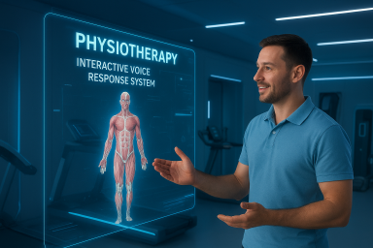
A bio digital interactive body interface would enable intuitive visual content exploration and substantially enhanced learning capabilities.
Implementing retrieval-augmented generation to connect previous notes, patient letters, scans, and clinical content into cohesive narratives will make the resource much more valuable and this could be integrated seamlessly with existing note transcription and patient management platforms
Currently, my custom files control content, but ultimately harvesting high-quality content via crawlers and API connections would scale beyond these files to encompass external databases and academic sources.
Understanding user interaction patterns would enable collaborative intelligence models that learn from practitioner behaviour and continuously refine clinical insights to deliver increasingly sophisticated and reliable analysis.
In the future I envisage the physiotherapist interacting with a large voice-activated screen to allow real-time clinician engagement with the system on screen.